
What Dress Is Flattering for Curves?
The right dress does not hide curves - it gives them structure, balance, and presence. If you have been asking what dress is flattering for curves, the answer is less about one body type rule and more about choosing silhouettes that define shape with intention. A flattering dress should feel polished at every angle, skim where you want ease, and hold where you want definition.
Curves tend to look strongest in dresses that acknowledge the waist rather than ignore it. That does not mean every look needs to be tight. It means the dress should create a clean line through the torso, support the bust comfortably, and fall in a way that feels smooth instead of shapeless. When that balance is right, the whole look feels elevated.
What dress is flattering for curves? Start with shape
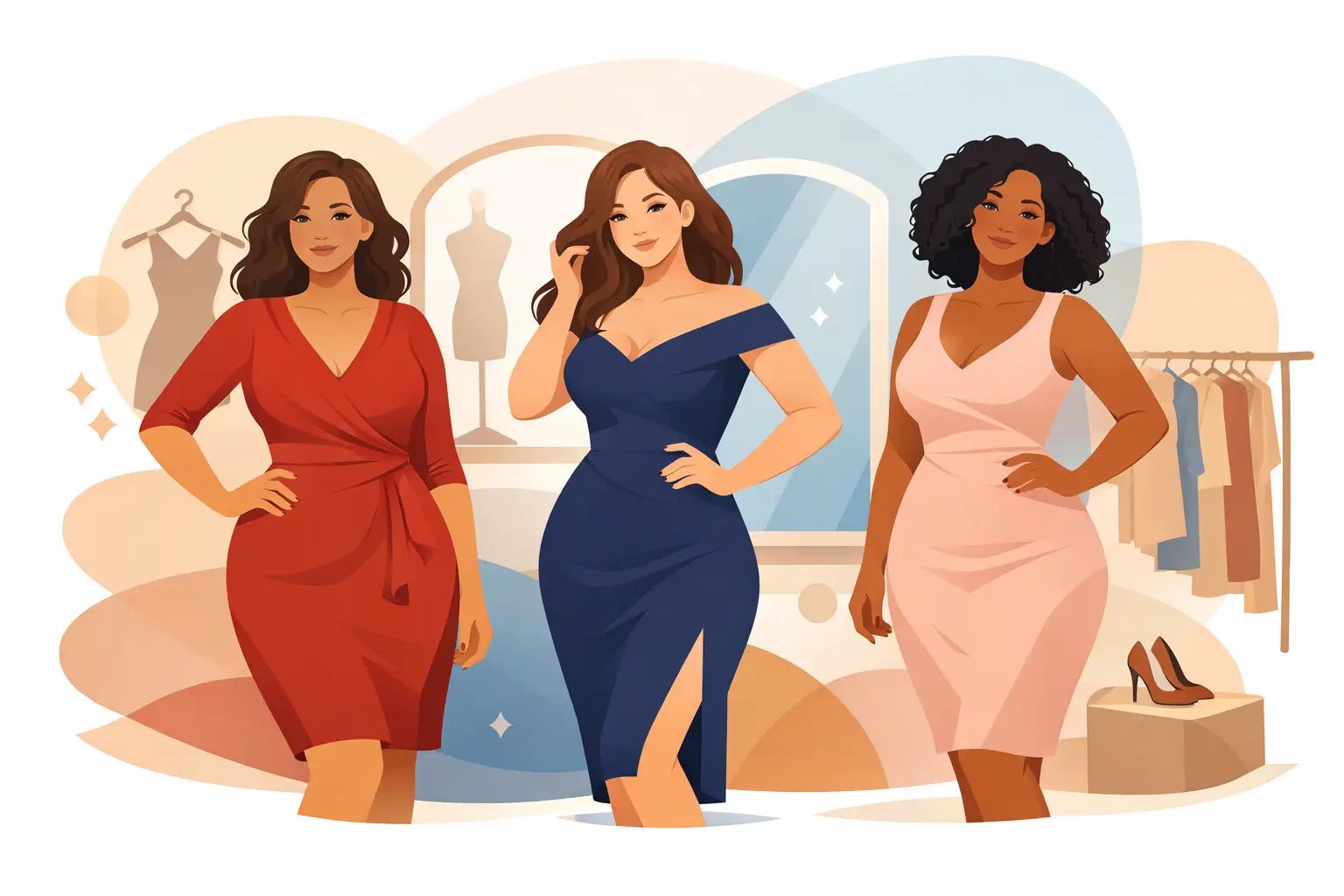
The most reliable answer is a dress that creates definition through the waist and keeps the rest of the silhouette clean. Wrap dresses, fit-and-flare styles, ruched midis, body-skimming sweater dresses, and structured maxi gowns often work beautifully because they respect natural proportions instead of flattening them.
A wrap dress remains one of the strongest options. The crossed front frames the neckline, the waist tie creates shape, and the skirt usually has enough movement to skim over the hips. It is especially strong if you want a refined look that works from dinner to events to travel. The only trade-off is fabric. If the material is too thin, it can pull across the bust or shift throughout the day.
Fit-and-flare dresses are another classic choice. The fitted upper half defines the waist while the skirt opens gently over the hips. This silhouette feels balanced and feminine, especially for occasions where you want polish without a body-conscious fit. If the flare starts too high or feels too stiff, though, it can add volume rather than elegance, so proportion matters.
Ruched dresses deserve more credit than they usually get. Strategic ruching through the waist or midsection softens lines, adds texture, and creates a sculpted effect without looking severe. For evenings, a sleek ruched midi can feel especially confident - close-fitting, but not unforgiving.
The best silhouettes for a confident, refined fit
Wrap and faux-wrap dresses
These are consistently flattering because they visually narrow the waist and create a graceful line through the torso. A V-neck wrap style also opens the neckline in a way that feels balanced if you are fuller in the bust. For a more secure fit, faux-wrap versions offer the same effect without needing constant adjustment.
Fit-and-flare dresses
This silhouette works well when you want shape with movement. It defines the smallest part of the waist and lets the skirt fall away from the body, which can feel comfortable and polished at once. For cocktail dressing, a midi fit-and-flare in a structured fabric often looks more elevated than an overly soft version.
Midi sheath dresses with stretch
A tailored sheath can be stunning on curves when the fabric has enough give and the cut is precise. The key is body-skimming, not body-squeezing. Look for darts, seaming, or subtle ruching that follows the body rather than compressing it too harshly.
A-line dresses
A-line styles are useful when you want a smoother line from waist to hem. They are less dramatic than fit-and-flare shapes, which makes them easy for daytime wear, dinners, and understated occasion dressing. They also pair well with structured necklines and longer sleeves if you prefer more coverage.
Column and mermaid gowns
For formalwear, curves often look exceptional in gowns that stay close to the body and then release near the hem. A column gown can feel statuesque, while a subtle mermaid shape brings definition and drama. The fabric matters here more than ever. A gown should contour cleanly, not cling in an uneven way.
Fabric can make or break the look
When women ask what dress is flattering for curves, fabric is often the missing piece. The right silhouette in the wrong material can still feel disappointing.
Structured stretch fabrics are usually the most forgiving and the most elegant. They hold shape, smooth the line of the body, and keep the dress from collapsing into every contour. Crepe, ponte, stretch satin, and thicker rib knits often perform well because they combine softness with control.
Very thin jersey can be hit or miss. It can drape beautifully, but it can also emphasize areas you would rather skim over. If you love a soft dress, look for ruching, lining, or double-layer construction to create a more finished result.
Stiff fabrics also require care. They can look luxe, but if they do not bend with the body, they may stand away from curves awkwardly. That is why tailoring and seam placement matter just as much as the dress category itself.
Necklines, sleeves, and details that elevate curves
A flattering dress is not only about the overall cut. Small design details change the entire effect.
V-necks and square necklines are especially strong because they frame the upper body cleanly. A V-neck tends to elongate the neckline and balance fuller proportions, while a square neckline can look structured, modern, and beautifully feminine. Sweetheart necklines also work well for occasionwear because they shape the bust without feeling heavy.
Sleeves depend on preference, but they also change proportion. A fitted long sleeve in a stretchy dress can create a sleek line. A soft flutter sleeve can add romance without bulk. What usually works less well is a sleeve that cuts tightly at the widest part of the arm or adds too much volume at the shoulder unless the rest of the silhouette is kept clean.
Belts, ruching, princess seams, corset-inspired bodices, and side draping are all details worth noticing. They bring direction to the dress. Rather than letting fabric simply fall, they guide the eye and create a more intentional shape.
What to avoid if a dress keeps missing the mark
Not every trend serves curves equally, and that is fine. Some dresses are fashionable on the hanger but underwhelming once on.
Completely shapeless shift dresses can make curves disappear in a way that feels bulky rather than chic. That does not mean you need skin-tight pieces. It means there should be some architecture - a belt, seaming, a defined waist, or a controlled drape.
Extra-thin slip dresses can also be tricky. They can look incredible if cut on the bias and made from quality fabric, but cheaper versions often cling in the wrong places and offer very little support. If you love the look, layering with shapewear or choosing a heavier satin can make a major difference.
Tiny prints, random cutouts, or heavy embellishment at the widest points of the body can interrupt the line of the dress. Sometimes less really does look more luxurious.
Dressing for the occasion without losing shape
For daytime, a polished midi wrap dress or structured knit dress is hard to beat. It looks put together quickly and feels effortless without reading casual. For dinners and events, a ruched body-skimming midi or an elegant off-shoulder dress creates presence without excess.
For vacations or warm-weather styling, a draped maxi with waist definition often feels better than a loose sack shape. You still get movement, but the look stays refined. For formal moments, choose a gown that supports the bodice properly and falls smoothly from the hips. That is where curves look especially striking.
At Teerafashion, the strongest dress choices are the ones that combine statement energy with a clean, sculpted fit. That balance is what makes a look feel expensive.
The real answer to what dress is flattering for curves
The most flattering dress for curves is one that defines rather than disguises. It follows your shape with structure, gives the waist presence, and uses fabric with enough weight to move beautifully. Wrap silhouettes, fit-and-flare cuts, ruched midis, and sculpted gowns are not flattering because they follow a rule. They are flattering because they create balance.
If a dress makes you adjust it all night, pull at the neckline, or wonder whether it is working, it is not the one. The right dress feels composed the moment you put it on. Curves do not need correction. They need a silhouette worthy of them.