

Gowns vs Cocktail Dresses: What to Wear
The wrong dress rarely fails because it is unattractive. It fails because the room asks for one level of polish, and your look answers with another. That is why gowns vs cocktail dresses is more than a style preference - it is about reading the occasion correctly and choosing a silhouette that feels refined, confident, and appropriate the moment you walk in.
For many events, the difference seems obvious until it is not. A formal wedding with a relaxed venue, a holiday party with an upscale guest list, a gala that says cocktail attire on the invitation but clearly leans black tie optional - these are the moments where the line starts to blur. Knowing where a gown ends and a cocktail dress begins helps you dress with intention instead of second-guessing your look.
Gowns vs Cocktail Dresses: The Core Difference
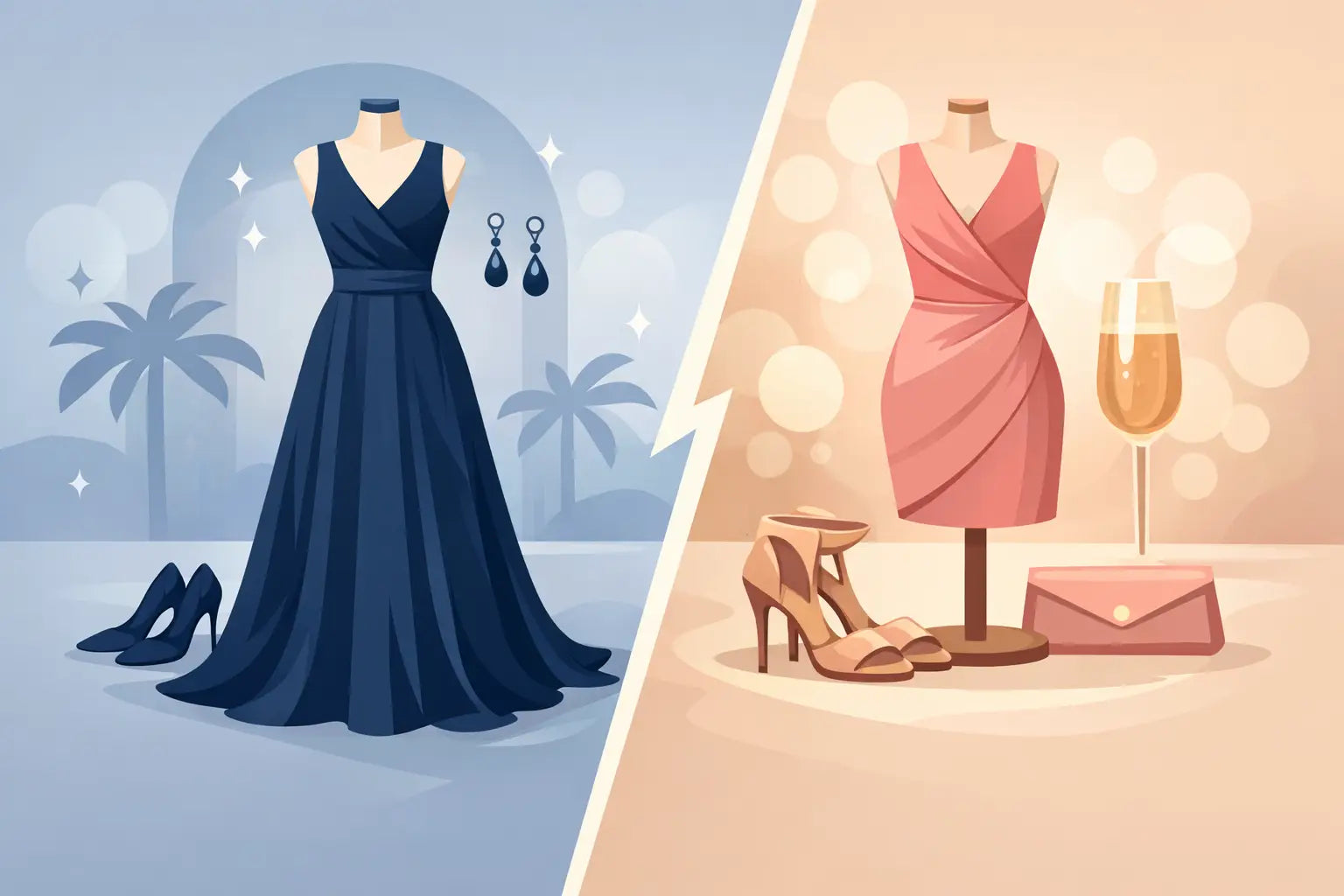
At the simplest level, a gown is a full-length dress designed for formal settings. It carries more presence, more drama, and usually more visual authority. Think floor-grazing hems, elevated fabrics, and silhouettes that are built to command a room.
A cocktail dress is shorter, typically falling above the ankle and often around the knee or midi length. It is polished, but not as ceremonious. Cocktail dressing is about balance - elegant without looking overdone, elevated without reading as eveningwear at its most formal.
That difference in length matters, but it is not the only factor. Fabric, structure, styling, and event context all shape how a dress is perceived. A sleek satin midi can feel more formal than a casual full-length dress in lightweight jersey. That is why the smartest approach is not simply asking how long the hem is. It is asking what level of finish the event expects.
When a Gown Is the Right Choice
A gown is usually the stronger option when the invitation signals formality clearly. Black tie weddings, galas, formal receptions, red carpet-style events, and evening celebrations with a luxury setting all make sense for full-length dressing. In these spaces, a gown looks aligned with the atmosphere rather than excessive.
The appeal of a gown is its instant elegance. You do not have to work as hard to create impact because the silhouette already carries it. A sculpted neckline, fluid skirt, or rich fabric can do most of the styling for you. That is especially valuable when you want a look that photographs beautifully and feels complete with minimal effort.
Still, not every gown works for every formal event. Some are dramatic and statement-driven, while others are refined and understated. If the event is conservative, a cleaner shape with controlled details will usually feel stronger than heavy embellishment or extreme cutouts. If the setting is modern and fashion-forward, a bolder gown can feel exactly right.
Comfort matters here too. Full-length dresses create elegance, but they can also limit movement if the fit is too narrow or the hem too long. For weddings, fundraisers, and long evening events, choose a gown that allows you to sit, walk, and move without adjusting it all night.
Signs the event calls for a gown
If the invitation says black tie, formal attire, or evening attire, a gown is the safest and most polished decision. You should also lean toward a gown if the venue is grand, the ceremony starts later in the evening, or the hosts clearly favor a more elevated presentation.
When a Cocktail Dress Makes More Sense
Cocktail dresses are ideal for events that ask for sophistication without full formalwear. Think cocktail weddings, engagement parties, upscale dinners, work celebrations, birthday events, holiday parties, and semi-formal receptions. They offer polish while keeping the mood lighter and more flexible.
A cocktail dress often feels easier to wear. It moves well, styles quickly, and can shift between occasions with less effort. That makes it a smart investment piece if you want something versatile enough for multiple social settings.
The strongest cocktail dresses still look elevated. Structured crepe, satin, velvet, lace, and clean tailoring all help a shorter dress feel intentional rather than casual. The goal is not simply wearing a shorter hem. It is choosing a piece that still delivers presence.
There is also more room for personality with cocktail dressing. You can play with sleeves, necklines, color, texture, and accessories in a way that feels fashion-conscious but not overcommitted. For women who want an elegant look without the gravity of a full gown, this category often hits the sweet spot.
How to Read the Dress Code Without Overthinking It
Dress codes are not always written with precision, so context matters. Start with the wording on the invitation, then consider the venue, time of day, and type of host.
If the event begins in the afternoon, happens outdoors, or has a more social than ceremonial feel, a cocktail dress is usually the stronger choice. If it starts in the evening, takes place at a luxury venue, or centers around a formal program, a gown may be the better fit.
Weddings deserve extra attention because the same dress code can vary by style. A beach formal wedding may still allow a softer, lighter gown. A city evening wedding marked cocktail attire may call for a sleek midi that looks almost formal. This is where fabric and finish become more useful than rules alone.
If you are choosing between the two, it is often safer to be slightly more polished than slightly underdressed. Refined always lands better than casual at an occasion-driven event.
Fabric Changes Everything
The conversation around gowns vs cocktail dresses often focuses on length, but fabric can shift the entire message of a dress.
Satin, velvet, chiffon, tulle, crepe, and embellished finishes naturally elevate a piece. They suggest occasionwear, even when the silhouette is simple. Cotton poplin, soft rib knits, or visibly casual jersey usually push a dress away from formal territory, even if it is long.
This is why a sharply cut midi in satin can outperform a basic floor-length dress when the goal is elegance. It looks intentional. It catches light well. It reads as evening-ready.
If you want your dress to feel luxe, choose fabric first, then silhouette. The combination of rich material and clean structure almost always creates a more elevated result than extra details alone.
The Styling Difference
A gown usually asks for restraint. Because the dress already makes a statement, accessories should support it rather than compete. Clean heels, a refined clutch, and selective jewelry keep the look polished.
A cocktail dress gives you more styling range. You can add statement earrings, a sharper heel, or a stronger beauty look without tipping the outfit too far. That versatility is part of its appeal.
The trade-off is that a cocktail dress often needs styling to feel fully finished, while a gown can feel complete on its own. If you prefer a simpler getting-ready process, a gown may actually be easier. If you enjoy shaping the final look through accessories, cocktail dressing offers more flexibility.
Which Option Flatters Best?
There is no universal winner. The right choice depends on what you want the dress to do for you.
A gown elongates the frame and creates a more statuesque effect. It can feel powerful, graceful, and high-impact, especially in monochrome or rich jewel tones. For moments when you want presence, a gown delivers it quickly.
A cocktail dress can feel sharper and more modern. It shows more leg, gives more visual structure, and often feels lighter on the body. If you want a look that feels polished but less formal, this is usually the better direction.
Body confidence also matters. Some women feel their best in the clean sweep of a floor-length silhouette. Others prefer the ease and proportion of a midi or knee-length dress. The most flattering dress is usually the one you do not have to keep adjusting.
A Smart Way to Choose Online
When shopping online, avoid choosing based on category name alone. Read the silhouette, length, fabric, and fit details together. A dress labeled formal may still wear more like cocktail, and a cocktail dress in a luxe fabrication may be perfect for an elevated evening event.
Look closely at how the dress is styled and how much effort it seems to require. If the shape is strong and the finish is refined, it will likely deliver that polished result in real life too. Brands like Teerafashion succeed when they offer occasionwear that feels sophisticated without becoming unreachable, and that balance is exactly what many women want now - elegance that looks premium and still feels wearable.
Color is another deciding factor. Deep black, emerald, navy, wine, champagne, and soft neutrals usually read more formal than bright daytime shades. If you are unsure whether a style leans gown or cocktail, color can help guide the final impression.
So, Which One Should You Wear?
Choose a gown when the event asks for ceremony, presence, and unmistakable elegance. Choose a cocktail dress when the atmosphere is polished but more relaxed, or when versatility matters just as much as impact.
The best occasionwear does not just match the invitation. It matches the version of you that wants to arrive looking composed, elevated, and entirely sure of her choice. When that balance is right, the dress does more than fit the event - it carries you through it beautifully.